

The Weekly Insight Podcast – Something Always Breaks… Eventually
Last week, the story about Treasury yields began to take on a life of its own. The 10-year had its largest single day jump since April 2025 on Wednesday. By Friday, it had climbed to 5.18%, up 121 basis points since February.
That produced some scary headlines:
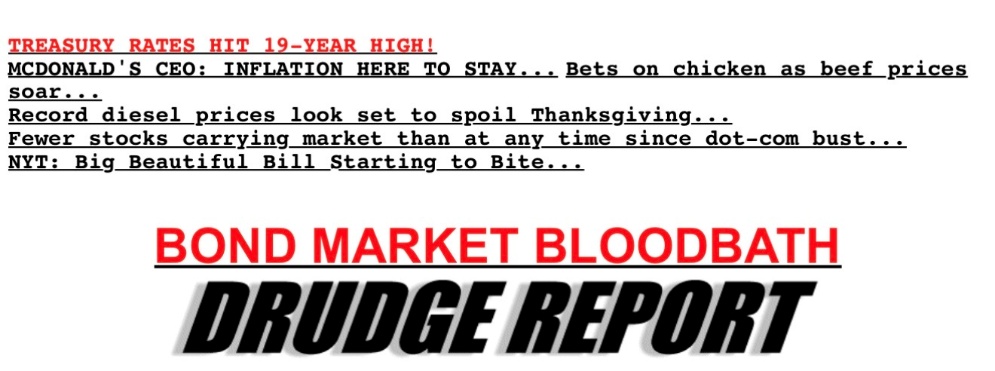
CNBC crystallized this sentiment in an article Thursday afternoon (“History Shows Financial Calamities Occur When Rates Rise Rapidly Like This: ‘Something Always Breaks’”). It called out the rapid pace of increase as a warning to the market and cited John Roque, head of technical analysis at 22V Research, who noted “something always breaks” when rates behave this way.
CNBC then went on to list Roque’s sixteen “notable breaks” in similar instances. For students of market history, it’s a fairly scary list:
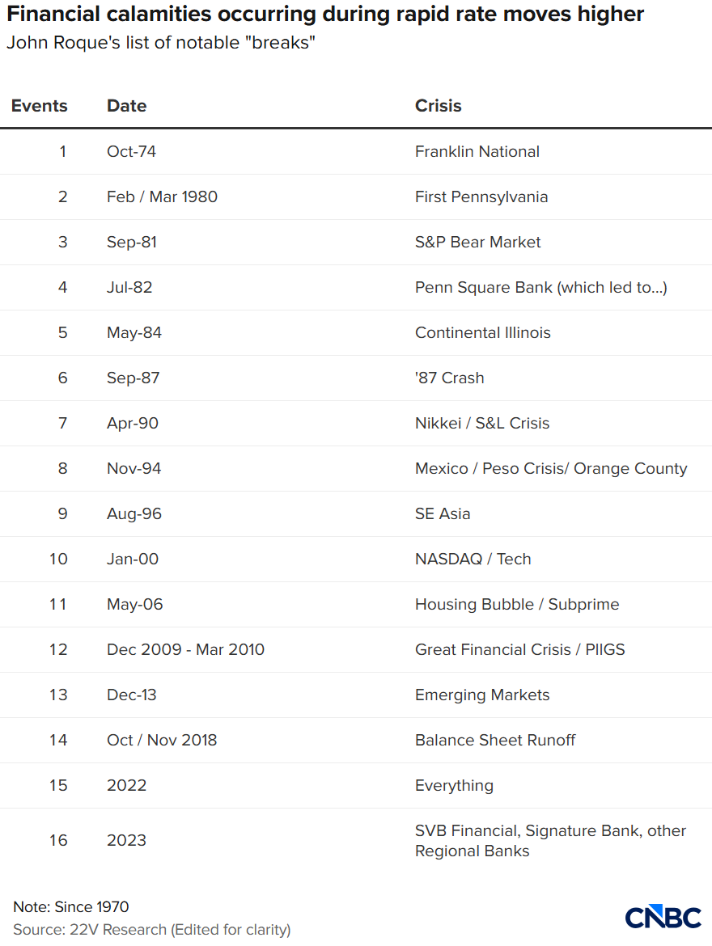
Roque’s methodology isn’t public – only the reporting around it. But we can say this: he – and CNBC – aren’t wrong.
Each one of the listed events included a rapid increase in Treasury yields. And, while the stock market correction was the story in the media each time, these were not stock market events. These were financial failures. Of the sixteen, most were the result of bank failures, emerging markets and/or government failures, and borrowed-money blowups. Rapidly rising rates expose those who borrowed short and lent long.
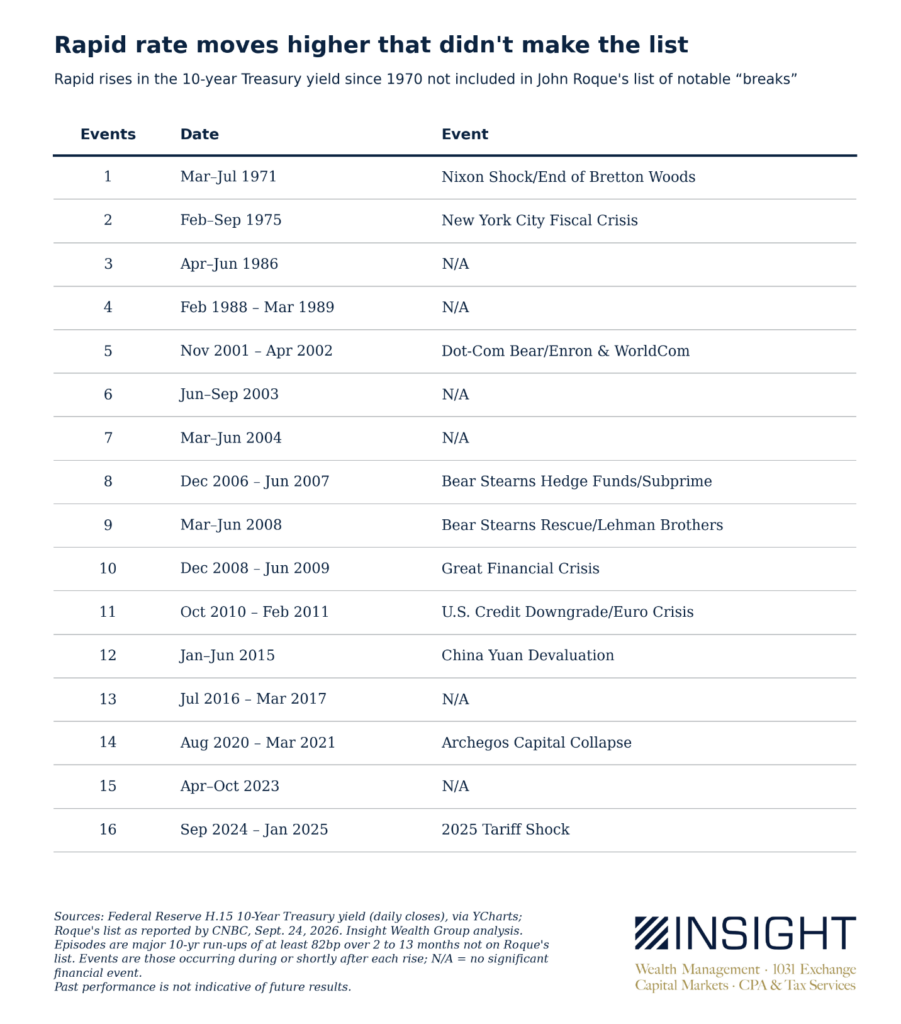
Wait, That’s Not the Full List?
Our read: Roque’s list was built backwards. Look at scary events and see what happened with Treasuries, not look at what happened with Treasuries and see what it caused. It’s making an assumption about correlation and causation that doesn’t get to the finish line.
His list isn’t the whole list. We went back and ran the numbers. We count thirty-two periods where 10-year Treasury yields jumped in rapid succession. Twice as many instances as cited by CNBC. Many of those instances, however, don’t have the scary feel of the sixteen that were included by Roque.
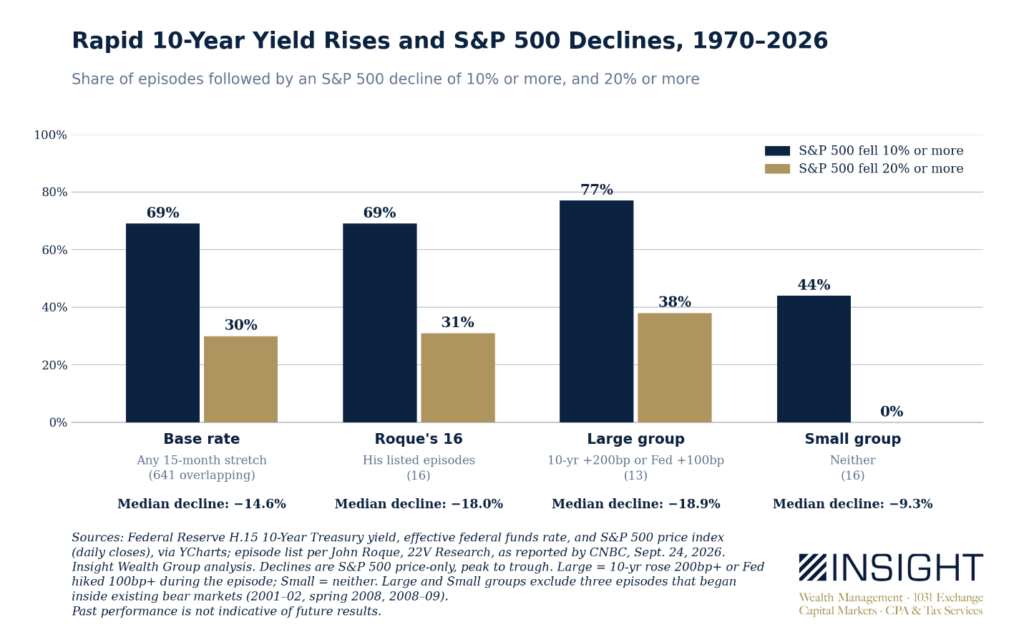
Something funny starts to happen when you look at Roque’s sixteen events. 69% of them were followed by the S&P 500 dropping 10% or more. 31% were followed by S&P 500 corrections of 20% or more.
But do you know what happens when you look at all 15-month periods from 1970 to 2026 in the S&P 500 (641 in total)? 69% of them included 10% drops in the S&P 500. 30% of them included 20% corrections. Roque’s events perform no worse than the average market.
So, does that mean we can ignore rapid increases in yields altogether? Absolutely not. But we shouldn’t fall into the fear trap either.
Breaking the data down one step further allows us to see where the risk really exists. And unlike what CNBC stated (the level of rate isn’t the concern, it’s the speed of the increase), it turns out it’s a combination of speed and size of the move.
If you further subdivide the data set (all 32 events – not just Roque’s Sixteen) you find the difference comes down to large rapid increases vs. small rapid increases. Rapid increases where 10-year Treasury yields rose 200 basis points – or the Fed raised rates 100 basis points – stand out immediately. 77% of those episodes were followed by a 10% market pullback and 38% were followed by a bear market. The small rapid increases have seen 10% corrections just 44% of the time and zero bear market corrections outside of 2008 when the financial crisis had already started (the S&P 500 was already off nearly 48% from its high when that small rapid increase started).
So that brings us back to where we are right now. As of Friday, the 10-year has risen 121 basis points, and the Fed has raised rates 25 basis points. Neither condition for a large rapid increase has been met. We sit firmly in the “small rapid increase” subset.
More telling than moves by the Fed and the 10-year is the move we’ve seen in 2-year Treasury yields (the short-end of the curve). They’ve popped up 148 basis points since late February. Friday, they closed at 4.86%, roughly 100 bp above the current fed funds range. That is consistent with the market assuming the Fed will raise more than 100 basis points this cycle. The Fed’s own September projections put the median at 4.1% by the end of the year. Is the Fed right or the market? The answer will determine whether we’re in “large rapid increase” territory.
Where Will Problems Pop Up?
None of this data makes Roque – or the media – wrong that there is rising risk due to rising interest rates. It just shows that headlines are missing the point.
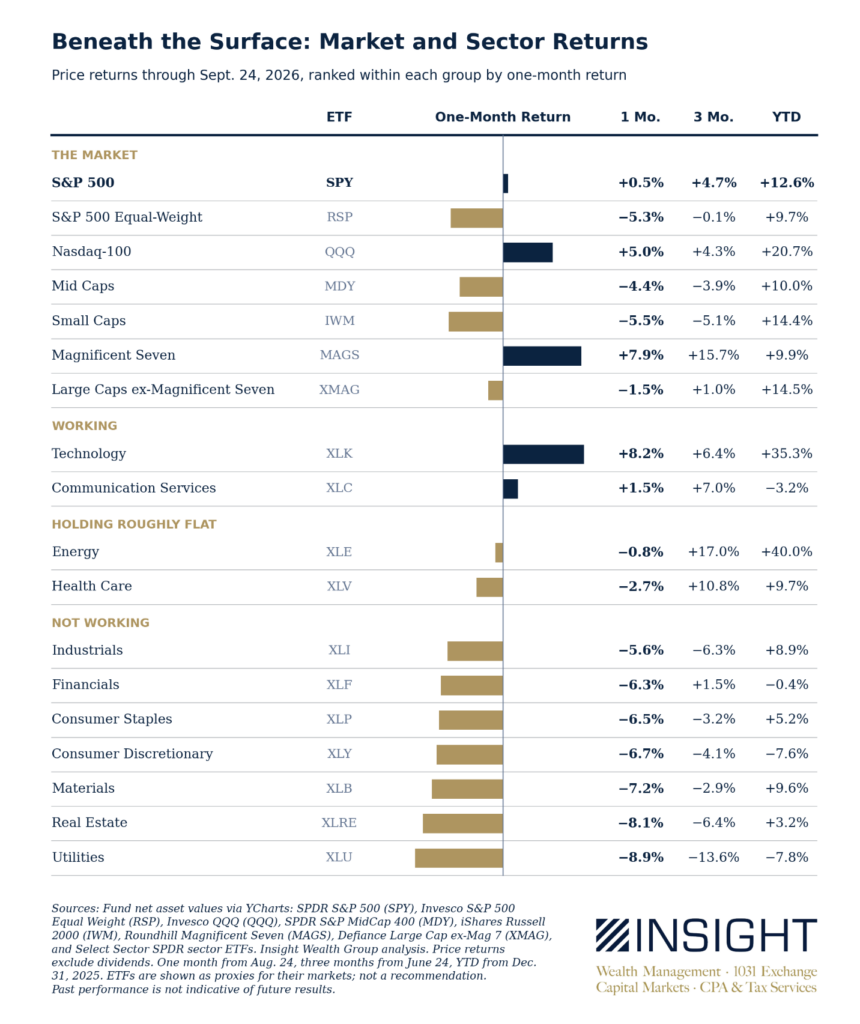
The impact of rising rates is already being felt. But it doesn’t show up in the index as a recent surge in tech stocks has covered up the damage. The last month has seen a reversal of the “moving away from the Magnificent 7” storyline that has defined much of 2026.
While the non-Magnificent 7 stocks have still outperformed this year, in the last month we’ve seen a significant pullback in sectors most affected by interest rates. Financials, real estate, utilities, private credit (BDCs) – all areas which are interest rate dependent – have struggled.
Implications for You
First, let’s be real: the S&P 500 is down just 0.72% from its high. The VIX – which measures market volatility – closed Friday at 14.84. That’s over 22% below its historical average. No matter what the news tells you, we are not in a crisis. But it is time to pay attention. What do we watch?
First, we need to watch for a move from “small rapid increase” to “large rapid increase.” That means 10-year Treasuries above 5.97% (79 basis points higher than Friday’s close). Or it would mean the Fed raising their target rate to 4.50% – 4.75%. Either would tell us we’ve moved into more dangerous territory.
Second, we must watch the high-yield spread. We’ve talked about this in previous memos. It continues to be at a low level (2.80%). A quick move to 3.60% (100 basis points above its low) would be a concern.
Finally, we need to closely watch regional banks and BDCs. Regional banks are the poster child for borrowing short and lending long. And BDCs are heavily dependent on the borrowers to whom they lend at floating rates. They will both be impacted by further steep increases in rates.
But that doesn’t mean there aren’t opportunities at this moment either. We’re in the process of rebalancing portfolios under our management to capture some of the equity upside we’ve seen in recent months and take advantage of higher yields. And owning high-quality fixed income at these higher rates is historically an opportunity. We’re watching closely to decide when to add duration to our fixed income strategies.
In the short term, however, we’d encourage you to think about where you’re holding your near-term cash needs. If it is in a money market account or FDIC insured CDs, that’s not a concern. But if it is interest rate sensitive vehicles like short-term bond funds, it’s time to make a switch (for Insight accounts – we’re already on this).
None of this, though, is selling stocks on the headline. A correction is always coming. Our behavior before one – and more importantly during one – will determine if it’s a catastrophe or an opportunity.
Sincerely,